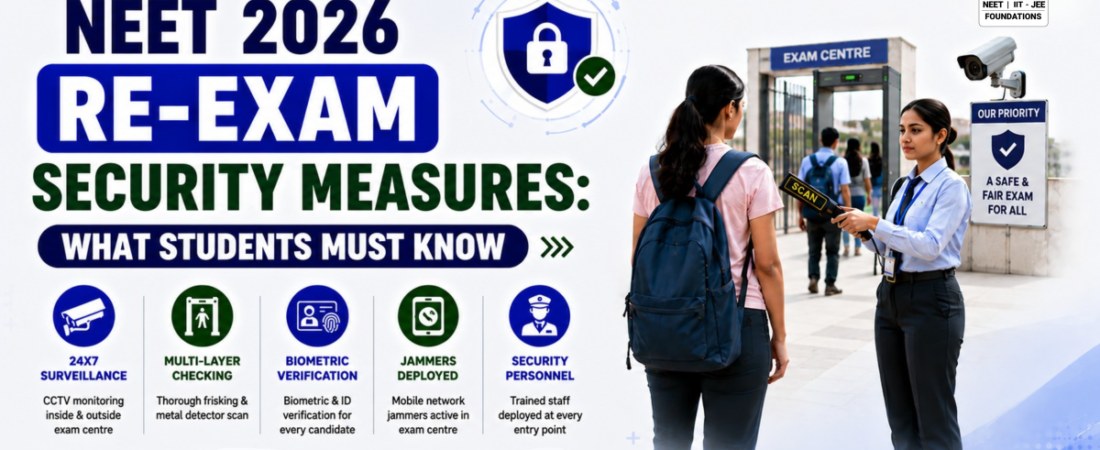
The controversy surrounding the NEET-UG 2026 re-examination has not completely settled, as several candidates across the country have claimed that they were unable to appear for the test due to technical and logistical problems. While the National Testing Agency (NTA) conducted the re-exam with enhanced security measures, concerns raised by affected students have sparked discussions about fairness and equal opportunity.
Many candidates have alleged that biometric verification problems prevented them from entering their examination centres. According to students and parents, fingerprint mismatches, server delays, and technical glitches caused confusion at several locations. Some aspirants claimed that they had reached the centres on time but were unable to complete the verification process before the gates closed.
Another issue reported by candidates involved incorrect navigation details and confusion regarding examination centre locations. Students travelling from distant areas faced difficulties due to traffic congestion and alleged discrepancies in map directions. In a highly competitive examination where every minute matters, such unexpected problems have become a matter of serious concern for affected families.
Education experts believe that technological systems should serve as support mechanisms rather than barriers. Biometric verification was introduced to strengthen transparency and prevent malpractice, but students argue that genuine candidates should not suffer because of equipment failures or circumstances beyond their control.
Legal experts suggest that if candidates can provide sufficient evidence showing that they reached their centres on time and were denied entry because of technical reasons, they may approach the courts seeking relief. Individual petitions before various High Courts remain a possibility. However, as of now, there has been no nationwide order directing another re-examination for such students.
The issue has also reignited the broader debate over the administration of large-scale entrance examinations in India. Every year, millions of students invest years of preparation and emotional energy into examinations like NEET. Consequently, even minor operational failures can have significant consequences on their academic futures.
Parents’ associations and education activists have urged authorities to establish more robust contingency mechanisms. Suggestions include backup biometric procedures, manual verification options, improved coordination with local authorities, and better communication channels to handle emergencies on examination day.
Supporters of these measures argue that technology should complement human judgment rather than replace it entirely. They believe that students should not lose an entire academic year because of a fingerprint mismatch or navigation-related confusion.
Meanwhile, the NTA has maintained that extensive precautions were taken to ensure the smooth conduct of the re-examination. Authorities have emphasized that security protocols were strengthened to maintain the integrity of the examination process.
The coming weeks may prove crucial. If affected candidates decide to approach the judiciary, the courts will have to balance two important considerations: protecting the sanctity of the examination and ensuring that deserving students are not unfairly deprived of an opportunity due to circumstances beyond their control.
For now, thousands of aspirants and parents are closely watching developments, hoping for clarity and a fair resolution. Whether the matter leads to further legal proceedings or administrative action, the debate has once again highlighted the importance of creating examination systems that are not only secure but also compassionate and student-friendly.
As India’s competitive examinations continue to evolve, the NEET 2026 episode serves as a reminder that technology, efficiency, and fairness must work together. In a system where dreams and careers are at stake, ensuring equal opportunity remains just as important as maintaining transparency.