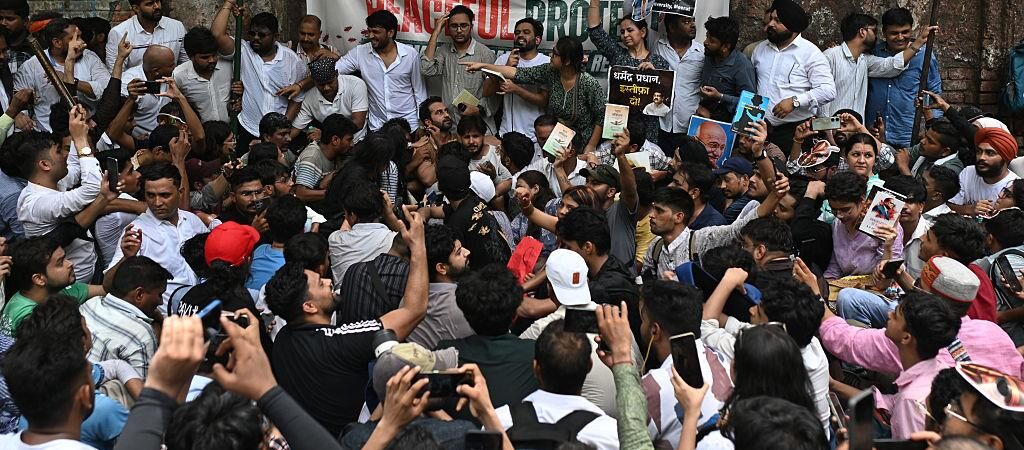
New Delhi, June 24, 2026: In a major development for India’s rapidly growing youth movement, Cockroach Janta Party (CJP) founder Abhijeet Dipke appeared before the Review Committee of the Ministry of Electronics and Information Technology (MeitY) on Wednesday regarding the withholding of the party’s official X account in India.
The hearing comes at a time when the Cockroach Janta Party has become one of the most discussed youth-led political movements in the country, particularly among students and young professionals frustrated with issues such as examination irregularities, unemployment, and government accountability.

According to reports, the Ministry had summoned Dipke to appear in person before the committee to present his case regarding the government’s decision to block access to the party’s official handle, @CJP_2029, on the social media platform X, formerly known as Twitter.
Before attending the hearing, Dipke announced through his personal social media account:
“Today at 3 PM, I will personally appear before the Review Committee of the Ministry of Electronics and Information Technology regarding the withholding of our account.”
The suspension of CJP’s account has triggered discussions across social media regarding digital freedom, online political expression, and the role of technology platforms in public discourse.
From Internet Satire to Street Protests
The Cockroach Janta Party began as a satirical online movement but quickly transformed into a nationwide youth campaign. The movement gained traction after remarks allegedly comparing unemployed youth to “cockroaches” sparked outrage and inspired online activism.

Since then, the party has attracted thousands of supporters through memes, satire, music videos, and unconventional protest methods.
Currently, Dipke is leading an ongoing sit-in protest at Jantar Mantar in New Delhi. The demonstration entered its fifth consecutive day on Wednesday, with protesters demanding accountability over examination irregularities and seeking the resignation of Union Education Minister Dharmendra Pradhan over the NEET controversy.
The Battle Over Digital Space
Supporters of the movement argue that blocking social media accounts of political movements raises serious questions regarding freedom of expression in the digital era.
Critics, however, maintain that governments retain legal authority to regulate online content under existing laws when required for public order or national interests.

The MeitY review committee hearing is therefore being closely watched, not only by CJP supporters but also by digital rights activists and legal experts interested in the evolving relationship between social media platforms and government regulation.
What Happens Next?
At the time of publication, the outcome of the hearing remains unknown.
If the review committee decides in favour of CJP, the party’s official account could potentially be restored in India. If the decision is upheld, the movement may continue using alternative social media channels and new accounts to communicate with supporters.
Regardless of the outcome, Wednesday’s hearing represents a significant moment in India’s ongoing debate over digital rights, online political participation, and government oversight of social media platforms.
As protests continue at Jantar Mantar and public attention remains fixed on the issue, the coming days could determine not only the future of CJP’s online presence but also set an important precedent for political expression in India’s digital landscape.
Tags: Cockroach Janta Party, CJP, Abhijeet Dipke, MeitY, X Account Ban, Digital Rights, Jantar Mantar Protest, NEET Controversy, Indian Politics, Social Media Regulation