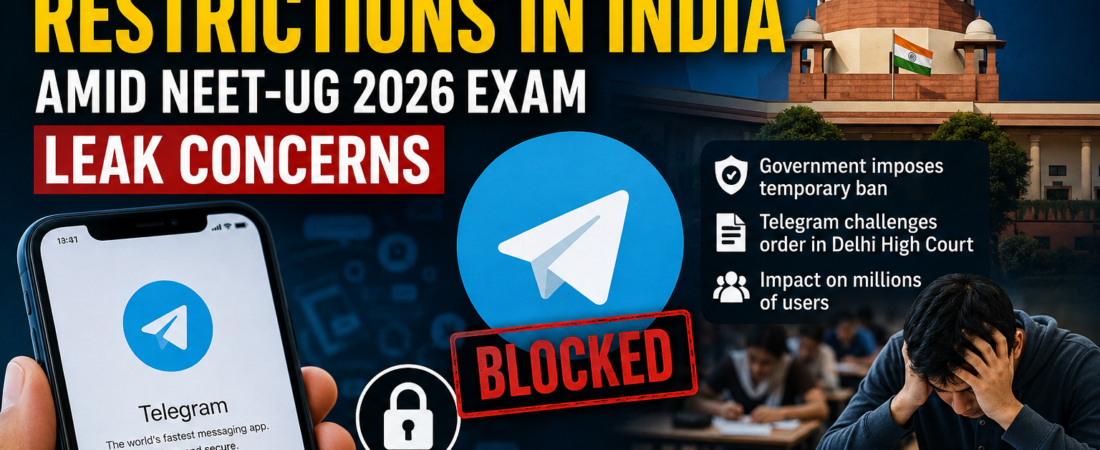
Hey tech fam! 📱 Telegram, one of the world’s most popular messaging platforms, has recently found itself at the center of a major controversy in India following allegations that certain groups used the app to circulate information related to the NEET-UG 2026 examination. The developments have sparked nationwide discussions on digital freedom, cybersecurity, and the role of social media platforms in preventing misinformation.

Why Telegram Came Under the Spotlight
As millions of students prepared for the NEET-UG 2026 re-examination, authorities increased surveillance on online platforms to curb the spread of fake question papers and misleading information. According to reports, several groups operating on Telegram were suspected of sharing unauthorized content, prompting concerns among officials and examination authorities.
The National Testing Agency (NTA) and security agencies reportedly recommended stricter monitoring of digital communication channels to safeguard the integrity of the examination process. The issue gained national attention as students and parents demanded a fair and transparent examination.
Temporary Restrictions and Government Action
The Indian government introduced temporary restrictions on Telegram ahead of the NEET-UG 2026 re-examination. Officials maintained that the measures were preventive and aimed at stopping organized cheating networks from exploiting the platform.
Authorities emphasized that the action was not directed against ordinary users but was intended to prevent the circulation of fake papers and misinformation that could affect millions of candidates. Cybercrime units and local police departments were also placed on alert to monitor suspicious online activities.

Telegram Challenges the Move
Telegram has reportedly challenged the restrictions through legal channels, arguing that broad limitations on the platform impact millions of genuine users, businesses, and communities that rely on the service for communication.
The company’s founder, Pavel Durov, has previously advocated for digital privacy and expressed concerns about wide-ranging restrictions on online platforms. Supporters of the company argue that misuse by a few individuals should not affect legitimate users.
The controversy has fueled discussions among legal experts, cybersecurity professionals, and digital rights advocates regarding the balance between national security and internet freedom.
Telegram Continues Expanding Its Features
Despite the ongoing controversy, Telegram continues to introduce new features for users worldwide. Recent updates include smartwatch support, improvements to bots, AI-powered moderation tools, and enhancements to the user interface.
The company has focused on strengthening community management features and providing administrators with better tools to control spam and suspicious activities. These developments reflect Telegram’s efforts to remain competitive in the rapidly evolving messaging ecosystem.

Debate Over Internet Freedom
The situation has reignited a broader debate on internet regulation in India. Some experts support strict measures to prevent examination fraud and protect the interests of students, while others warn that platform-wide restrictions may raise concerns regarding digital rights and freedom of communication.
Technology analysts believe the outcome of the legal proceedings could influence future regulations governing messaging platforms and social media services in India.
Impact on Millions of Users
India represents one of Telegram’s largest user bases. The platform is widely used by students, businesses, educators, content creators, and communities. Any disruption to the service can affect communication, learning resources, and business operations.
Many users have expressed concerns about prolonged restrictions, while others support strong action against those responsible for spreading fake papers and misinformation.
As investigations continue and legal challenges unfold, millions of users are closely watching the developments. The case could shape the future relationship between technology companies and regulators in India.
Conclusion
The Telegram controversy surrounding NEET-UG 2026 has highlighted the challenges governments face in balancing security concerns with digital freedom. While authorities seek to ensure fairness and transparency in competitive examinations, technology companies and users continue to emphasize the importance of open communication and privacy.
The coming weeks are expected to be crucial as legal proceedings continue and policymakers evaluate the future of digital governance in the country.
Tags: #Telegram #TelegramNews #TechNews #IndiaNews #NEET2026 #CyberSecurity #DigitalRights #SocialMedia #Technology #PavelDurov #InternetFreedom #MessagingApps